

From Algae to the Purest Natural Astaxanthin
Producing high-quality natural astaxanthin starts long before extraction.
At axabio, we control every critical step of the process, from selecting and cultivating our Haematococcus pluvialis strains to harvesting, extraction, standardisation and final quality control.
Our closed photobioreactor system, carefully controlled cultivation conditions and supercritical CO₂ extraction process are designed around one objective: producing pure, consistent and traceable natural astaxanthin, batch after batch.
STEP 1
Strain selection
Selecting the Best H. pluvialis Strains
We start with carefully selected and well-characterised Haematococcus pluvialis strains, chosen for their ability to produce high and consistent levels of natural astaxanthin.
Over the years, we have built a collection of different strains that we continuously study, select and refine to improve their performance, stability and astaxanthin yield.
One of our best-performing strains has an unusual origin: it was isolated from Haematococcus pluvialis naturally growing on the roof of one of our own buildings. Today, it is part of the strains we cultivate and continuously improve for astaxanthin production.
STEP 2
Green-phase cultivation
Growing the Algae Under Controlled Conditions
Once selected, our Haematococcus pluvialis strains enter their green vegetative stage, where the objective is to build healthy, high-quality biomass before astaxanthin production begins.
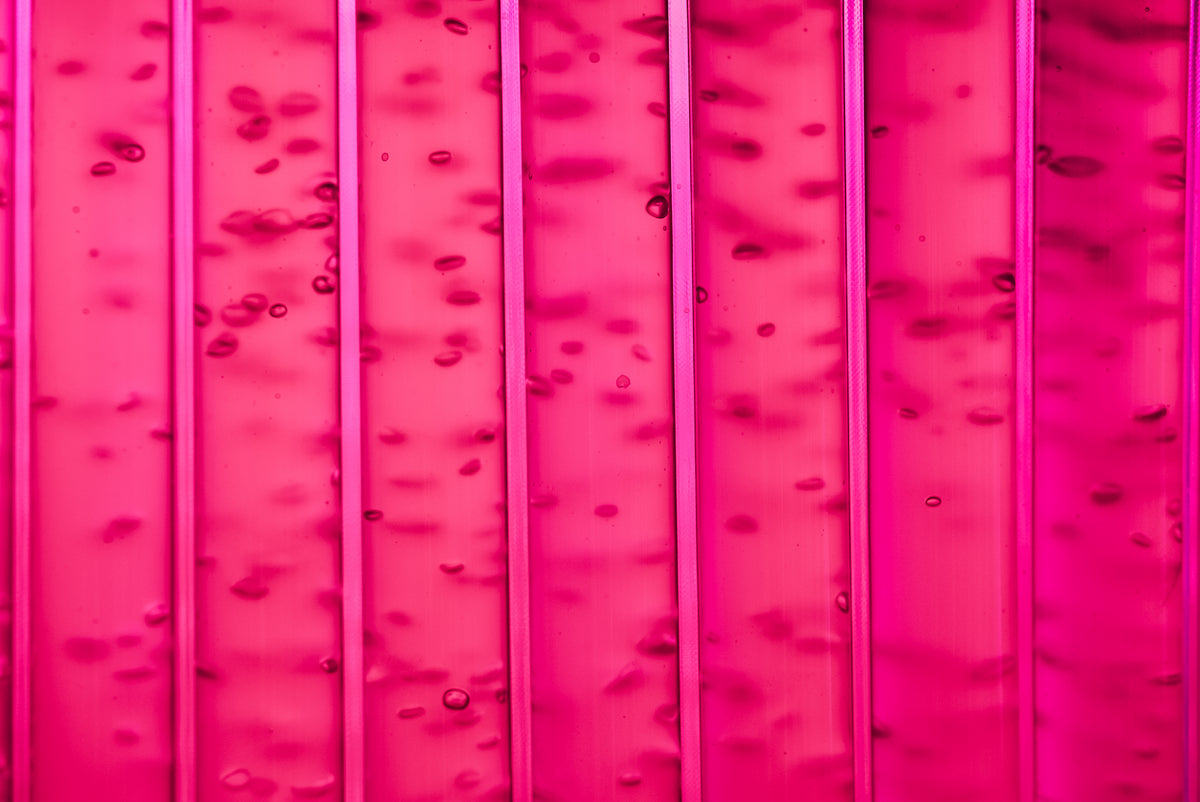
The algae are cultivated in closed flat-panel photobioreactors, where key growth conditions such as light exposure, temperature, CO₂ supply and nutrients can be carefully controlled throughout the process.
Unlike open cultivation systems, this closed environment gives us greater control over growing conditions while limiting exposure to external contaminants. The result is a consistent and controlled biomass ready for the next stage, when the algae are naturally stimulated to produce astaxanthin.
STEP 3
Stress induction
Triggering Natural Astaxanthin Production
Once the algae have built enough healthy biomass, we carefully adjust light intensity and nutrient availability to trigger their natural stress response and stimulate astaxanthin production.
This is where our flat-panel photobioreactors make a key difference. Their thin, optimized design allows light to penetrate the entire culture more evenly, ensuring that virtually every cell receives the light stress needed to accumulate astaxanthin.
The result is a more homogeneous culture, with cells consistently reaching their deep-red, astaxanthin-rich stage, ensuring higher and more consistent astaxanthin content.
STEP 4
Harvesting
Harvesting the Astaxanthin-Rich Biomass
Once the algae have reached their mature, deep-red stage and optimal astaxanthin concentration, the biomass is ready for harvesting.
The entire process takes place within a closed system, minimizing exposure to the external environment and reducing the risk of contamination.
The harvested biomass is then carefully collected and prepared for the next processing stage, while preserving its astaxanthin content, purity and quality.
STEP 5
Cell-wall disruption
Breaking the Cell Wall
Haematococcus pluvialis protects its astaxanthin behind a particularly tough aplanospore cell wall. After harvesting, we carefully disrupt this protective structure to release the astaxanthin trapped inside.
This critical step makes the astaxanthin accessible for extraction and ensures high bioavailability in the final product.
Controlled cell-wall disruption also helps maximize recovery while preserving the integrity and quality of the natural astaxanthin.
STEP 6
Supercritical CO₂ extraction
Extracting Astaxanthin with Supercritical CO₂
We use supercritical CO₂ extraction, one of the cleanest and most advanced methods available for extracting natural astaxanthin. Unlike conventional solvent extraction, it requires no hexane or other organic solvents, leaving no solvent residues in the final extract.
Although more costly and technically demanding, supercritical CO₂ allows us to selectively extract the astaxanthin-rich oleoresin while preserving its natural composition and quality.
The result is a highly pure, premium natural astaxanthin oleoresin, produced without compromising on extraction quality.
STEP 7
Standardisation & formulation
Tailoring Astaxanthin to Each Application
After extraction, the astaxanthin is carefully standardised to achieve the target concentration and ensure consistent potency from batch to batch.
Depending on the final application, it can then be formulated as an oleoresin, powder or beadlet, each designed for specific formulation and manufacturing requirements.
This allows our natural astaxanthin to be easily integrated into a wide range of nutraceutical applications.
STEP 8
Quality control & packaging
Quality Control & Packaging
Before packaging, every batch undergoes strict quality control to verify astaxanthin potency, purity and consistency.
HPLC analysis confirms astaxanthin concentration, while contaminant and stability testing ensure the product meets our quality and safety standards.
The final product is then packaged under an inert atmosphere to limit oxidation and preserve its potency and stability throughout its shelf life.


Not sure which format fits your project?
Tell us about your application, and our team will help you choose the right astaxanthin format.
Not sure where to start?
Talk to our formulation team & get your free samples in 48 Hours.
Request free samples
Test the quality yourself. We'll ship from Belgium within 48 hours.
Book a consultation
Talk to our experts about formulation, MOQs, timelines, and custom solutions.